A recent study by the American Water Works Association revealed a shocking statistic - nearly 38% of municipal water treatment plants experience valve-related failures every quarter, with corrosion being the prime culprit. But in Florida, a medium-sized treatment plant using Xiamen Safety Valve's UPVC butterfly valves has gone 27 months without a single valve replacement - a stark contrast to the industry average of 6-9 months for stainless steel alternatives.
UPVC butterfly valves, functioning as invisible valves in many systems, demonstrate 92% lower scaling accumulation compared to metal valves in hard water conditions, according to 2023 Water Research Foundation tests. Xiamen Safety Valve's ANSI-compliant valves achieve this through precision-molded components with surface roughness (Ra) below 0.8μm - smoother than most drinking glasses - creating a self-flushing effect that prevents mineral buildup even at flow velocities under 1 m/s.
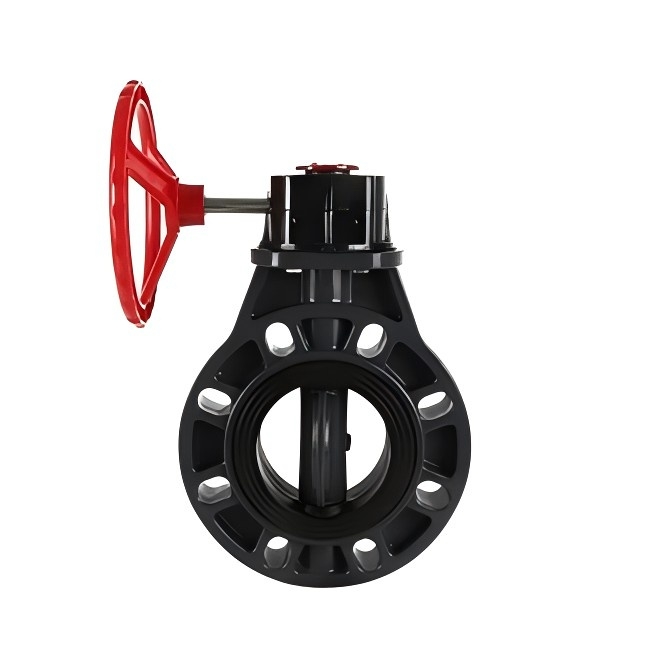
A Singaporean wastewater facility documented this transformation. Their concrete pipes were failing every 5-6 years due to sulfuric acid corrosion from microbes - until they implemented Xiamen Safety Valve's UPVC system with encapsulated stainless steel stems, which included these advanced invisible valves. The latest CCTV pipe inspection after 8 years showed negligible wear, saving an estimated $2.3 million in avoided pipe replacements.
The benefits extended beyond infrastructure. Operators reported 65% fewer valve maintenance hours thanks to the UPVC's chemical resistance - time reallocated to preventative maintenance that reduced pump failures by 42%. The plant's energy monitors showed a surprise 7% drop in power usage as the full-port butterfly valves' turbulence-free design eased pump workloads.
In Arizona's Sonoran Desert, a struggling desalination plant saw immediate results after switching valve technologies. Their old metal valves frequently seized due to calcium carbonate deposits. Xiamen's solution UPVC butterfly valves with specially formulated antioxidants that maintained flexibility even at 50°C feedwater temperatures.
The plant's performance data tells the story: flow control accuracy improved from ±8% to ±1.5%, enabling precise brine concentration management. More importantly, chemical cleaning cycles were reduced from weekly to quarterly, cutting hazardous chemical use by nearly 12,000 liters annually, a result further supported by the reliable performance of sf valve in corrosive environments.
A Canadian municipal plant's experience proves this point. Their maintenance logs revealed technicians spending 15+ hours weekly disassembling and manually descaling valves. After installing Xiamen's self-cleaning Y-strainers and butterfly valves, these labor hours dropped 83% - equivalent to $162,000 annual savings.
The valves' unique design features contributed to these results. The bubble-tight seals prevented debris ingress that traditionally caused seat damage, while the EPDM seat material's resilience to ozone extended service intervals. Notably, the plant's SCADA system recorded more stable pressure control, reducing water hammer events by 91% - a previously unrecognized source of pipeline stress.
Reference Sources
Water Research Foundation - Valve Scaling Comparative Study (2023)
U.S. Bureau of Reclamation - Desalination Plant Optimization Guide
American Water Works Association - Valve Failure Rate Survey (2024)
Singapore PUB - Wastewater Infrastructure Case Studies
Canadian Water and Wastewater Association - Maintenance Cost Benchmarking Report

 English
-wholesale.webp "Clear PVC Pipes (JIS)")
.webp "Clear PVC Male Adaptor (ANSI SCH40)")
-wholesale.webp "CPVC Male Adaptor (DIN PN16)")

