AC 220V, AC110V, DC 24V, DC 12V are all available
Normal open/closed type or Intelligent regulating type are option
Can be controlled remotely via signals,easily integrated into SCADA, PLC, or IoT systems for automated process control.
Eliminates the need for manual operation, saving time and labor in large-scale systems.
Enables centralized control in complex piping networks.
Electric actuated ball valves provide automation, precision, safety, and efficiency, making them ideal for modern industrial and commercial systems where reliability and control are critical.
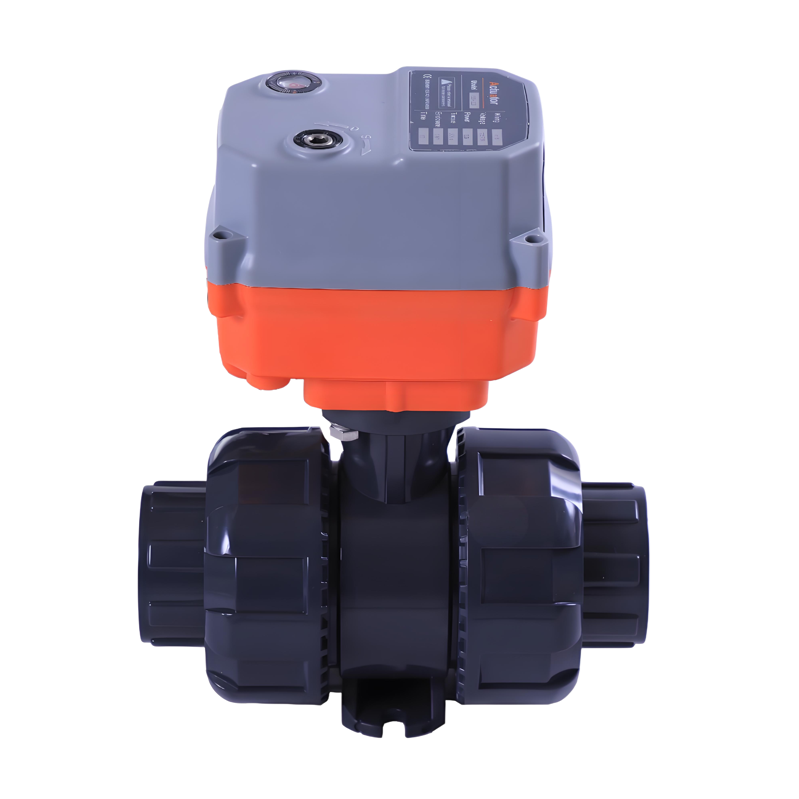
Electric actuated ball valves offer several advantages over manual or other types of automated valves, making them popular in industrial, commercial, and even residential applications. Here are the key benefits:
1. Remote Operation & Automation
Can be controlled remotely via signals (e.g., 4-20mA, 0-10V, or digital protocols like Modbus). Reduces the need for manual intervention, improving efficiency in hard-to-reach or hazardous locations.
2. Fast and Reliable Shutoff
Provides quick opening/closing (typically in seconds), crucial for emergency shutdowns.
Ensures tight sealing (bubble-tight shutoff in many cases), reducing leakage risks.
3. Energy Efficiency
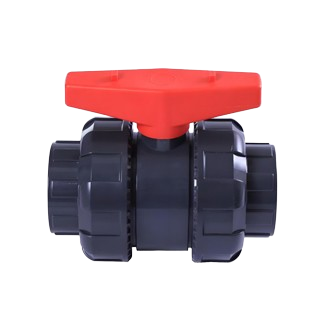
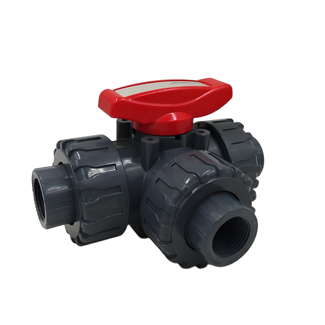
Electric actuated upvc valves consume power only when moving, unlike pneumatic systems that need constant air supply.
Low power consumption compared to hydraulic systems.
4. Precise Flow Control (Modulating Capability)
Some electric actuators allow proportional control (0-100% opening), ideal for flow regulation in process industries.
Better accuracy than manual or pneumatic alternatives in variable flow applications.
5. Low Maintenance & Long Lifespan
Fewer moving parts than pneumatic/hydraulic systems, reducing wear.
No risk of air leaks (unlike pneumatic actuators) or fluid leaks (unlike hydraulic systems).
Sealed design protects internal components from dust and moisture.
6. Safety & Hazard Compliance
Suitable for explosive environments (with explosion-proof actuators).
No risk of air supply failure (unlike pneumatic valves).
Can be programmed for fail-safe modes (open/close/remain in last position on power loss).
7. Flexibility & Adaptability
Can be used in high-pressure and high-temperature applications.
Compatible with a wide range of fluids (water, oil, gas, corrosive chemicals).
Available in various materials (stainless steel, PVC, etc.) for different industries.
8. Reduced Labor Costs
Eliminates the need for manual operation, saving time and labor in large-scale systems.
Enables centralized control in complex piping networks.
9. Smart Features & Diagnostics
Modern electric actuators offer feedback signals (position, torque, alarms).
Self-diagnostic capabilities help in predictive maintenance.
10. Quiet Operation
unlike pneumatic valves (which release noisy air exhaust), Electric actuators operate silently.
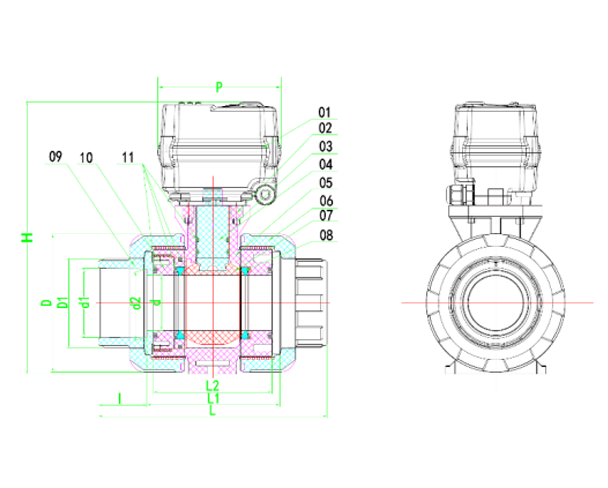
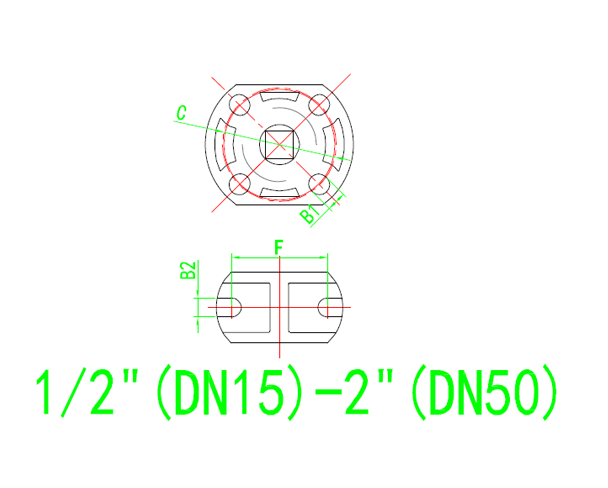
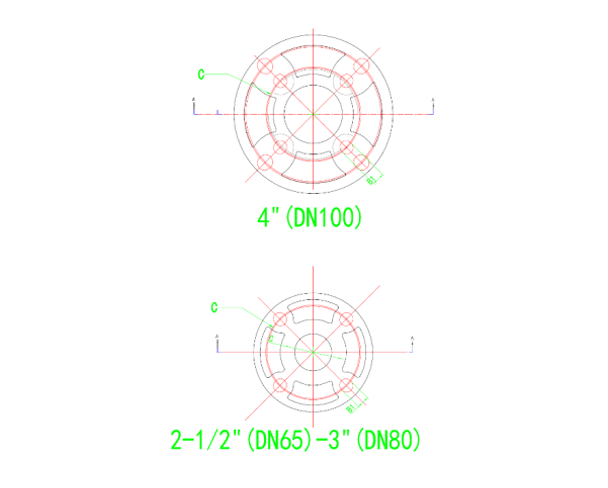
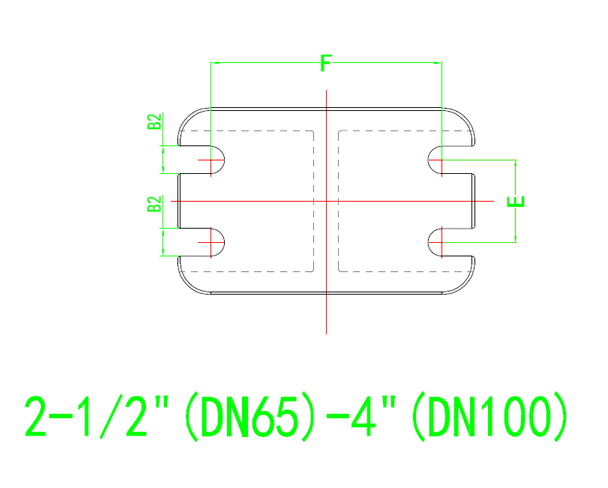
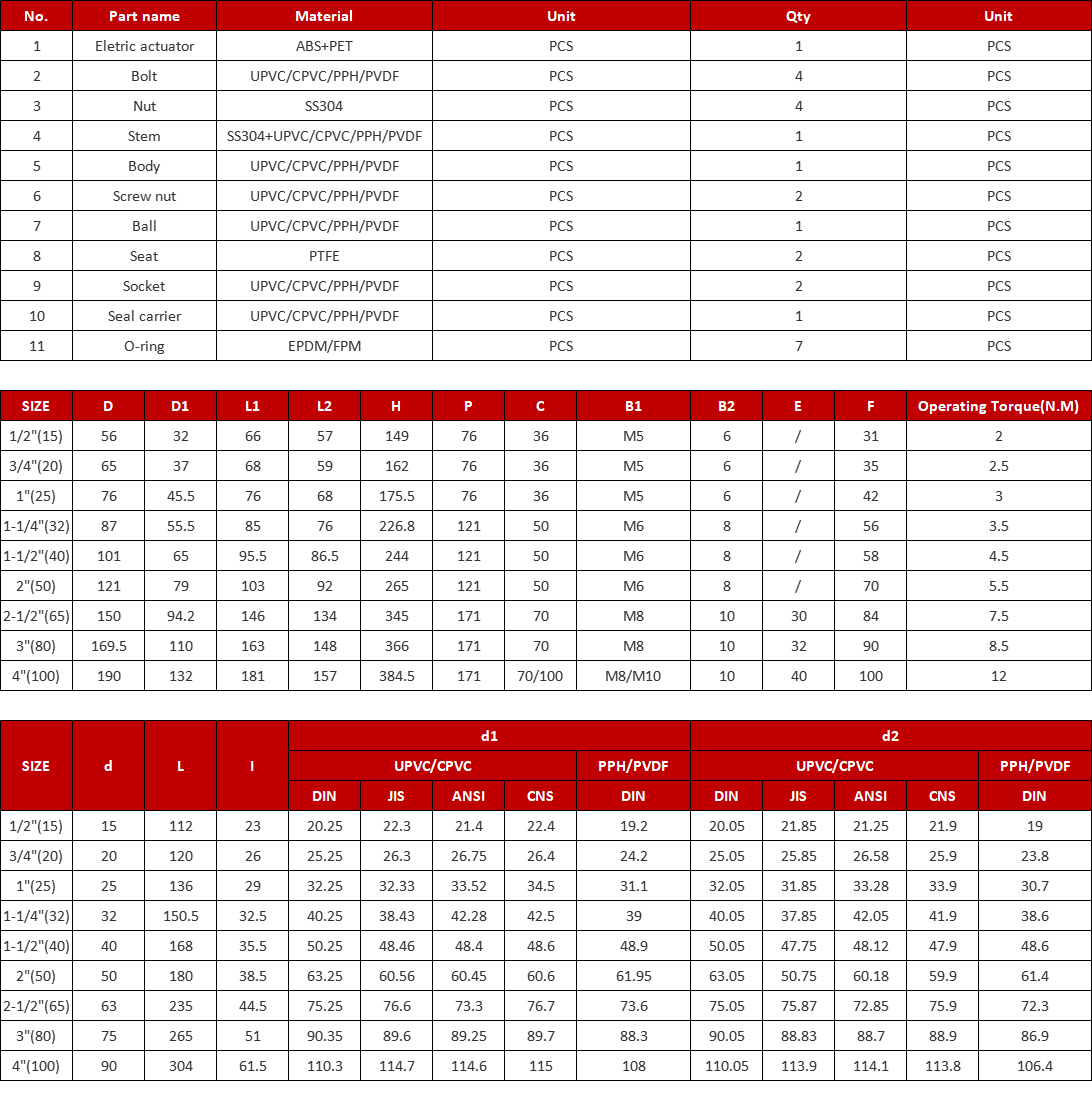
Technical Parameter
Size: 1/2" (DN15)~4" (DN100)
Socket: DIN/ANSI/JIS/CNS
Thread: PT/NPT/BSPT
Pressure Rating: 1/2" (DN15)-2" (DN50) PN16 2-1/2"(DN65)-4" (DN100) PN10

 English